



Introduction
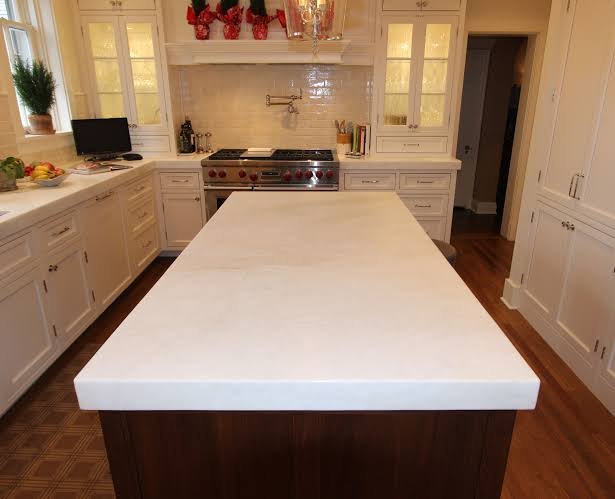
Vietnam Super White Marble is now considered among the best natural stones in contemporary architecture and interior design. With its dazzling white color and stylish look, it is one of the best options for the floor, wall cladding, countertop, and luxury home decor application. But choosing the best marble slabs is an art of vigilance and expertise. Since marble is a natural product, your project can be greatly impacted by the amount of material quality, texture and durability variance that you get .
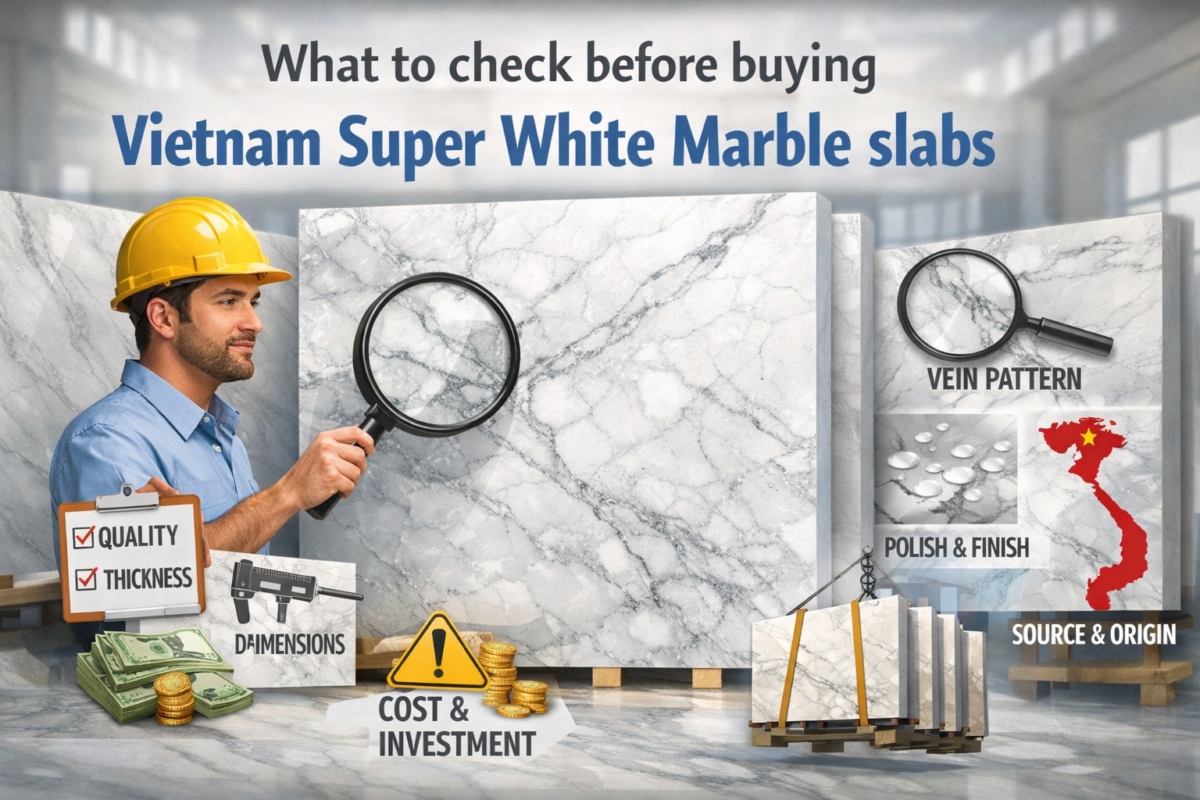
There are a few things you need to consider once you start looking into the residential and commercial usage of marble slabs, as buying means taking into account so many factors that contribute to the quality and the life of the stone. When it comes to purchasing raw material in the form of Vietnam pure white marble, these things could help you get to the right one by your expectations.
What One Should Know about The Quality Of The Marble
The overall quality of the stone is the very first thing to check when buying super white marble slabs in Vietnam. Quality marble normally has a consistent white background with very little flaws or stains. Too much grey spots, yellowish stains, or inconsistent color design can imply inferior quality stone.
The density is an important consideration with the marble. Compact marble slabs tend to be tougher and less easy to stain and wet. Buyers should also closely examine the surface for any cracks, resin fills, or structural defects that may impair the stone’s durability or weather resistance.
Professional builders and architects prefer a vietnam white marble supplier billstone manufacturer in vietnam as quality is guaranteed due to strict quality control in quarrying and finishing by the reputable producers.
Verifying Slab Size and Thickness
The thickness of the slab is a factor in both performance and installation. Marble slabs come in thickness like 16 mm, 18 mm, 20 mm etc depending upon the application whether it is Flooring or Wall Cladding. Floor slabs generally need to thicker for structural reasons, while wall cladding can occasionally be thinner.
Consistent thickness for all slabs is necessary for an easy installation. Uneven slabs may cause alignment problems during installation and may result in extra labour cost. Well calibrated slabs lead to a easier installation and also to a better end result.
A lot of veteran architects and interior decorators approach suppliers from among Top 10 marble company in kishangarh after the slab covers all professional standards in thickness, size and finish.
Assessing Surface Finish and Polish
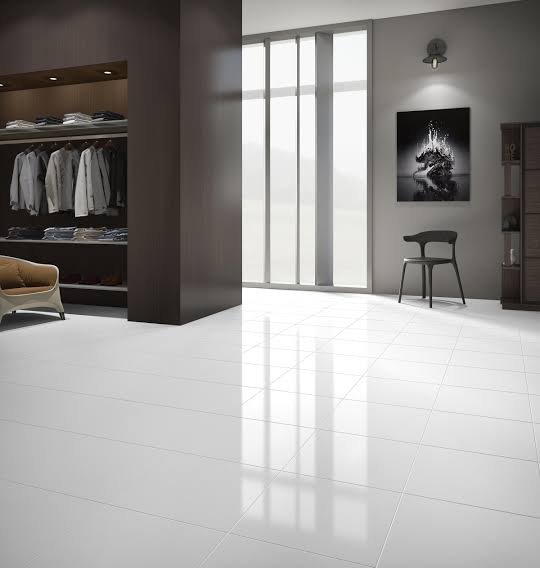
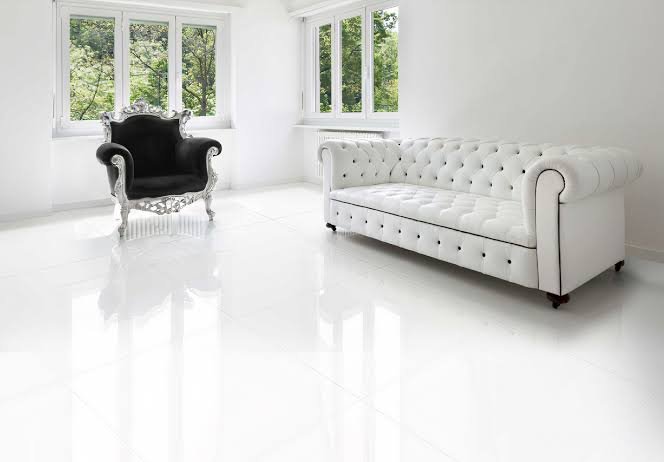
Surface finish of marble slabs, is another major aspect to consider. A fine polished surface will bring out the natural elegance of the stone and efficiently reflect the light. This reflective aspect is among the reasons why the Vietnam Super White Marble is widely used in high end interiors.
When you inspect slabs, see how uniformly it reflects light on the surface. Uneven polishing can cause dull spots, which will discourage considering visual appeal post-installation. The edges of the slabs should be smooth and well finished, so as not to get chipped during transportation or installation.
Good polishing also contributes to the reduction of surface porosity, hence making marble easier to be taken care of in the long run.
Checking for Structural Integrity
Since marble is a natural stone, minor variations are expected, but structural integrity should never be compromised. Carefully inspect the slab for visible cracks, pinholes, or weak lines that might lead to breakage during cutting or installation.
Small natural veins are normal in marble, but large fractures or excessive resin fillings can weaken the slab. It is also advisable to gently tap the surface to check for hollow sounds, which could indicate internal cracks.
When buying slabs in bulk, sourcing from a trusted vietnam white marble supplier in india can help ensure consistent quality and minimize the risk of receiving defective materials.
Understanding the Source and Authenticity
Another important aspect to verify is the origin of the marble. Authentic Vietnam Super White Marble is quarried in Vietnam and processed into slabs before being exported to international markets. Ensuring the authenticity of the material helps maintain its value and quality.
Buyers should always ask suppliers about the source of the marble, processing methods, and transportation procedures. Reliable suppliers typically provide detailed information about quarry origin and slab processing standards.
Large construction firms and commercial developers often work directly with a reputable vietnam white marble exporter india to maintain transparency in sourcing and ensure that the marble meets international quality standards.
Comparing Price and Value
Price is always an important consideration when purchasing marble slabs. However, the cheapest option is not always the best choice. High-quality marble may cost more initially but offers better durability, aesthetics, and long-term value.
It is advisable to compare prices from multiple suppliers while keeping quality as the primary factor. Extremely low prices may indicate lower-grade marble, poor finishing, or inconsistent slab quality.
Balancing cost with quality ensures that the marble performs well and maintains its visual appeal for years.
Conclusion
Buying Vietnam Super White Marble slabs requires careful evaluation to ensure the stone meets both aesthetic and structural requirements. Checking factors such as marble quality, slab thickness, surface finish, structural integrity, and supplier credibility helps prevent costly mistakes during installation.
By sourcing marble from reputable manufacturers and suppliers, buyers can ensure they receive high-quality slabs that enhance the beauty and durability of their interiors. With proper inspection and professional installation, Vietnam Super White Marble can deliver timeless elegance and lasting value for both residential and commercial projects.
FAQs
1. How can I identify high-quality Vietnam Super White Marble slabs?
Look for uniform white color, minimal impurities, consistent thickness, and a well-polished surface.
2. What slab thickness is best for marble flooring?
Typically, slabs between 18 mm and 20 mm are preferred for flooring because they offer better durability.
3. Is it normal for marble slabs to have small veins or patterns?
Yes, natural veins are common in marble, but large cracks or excessive fillings should be avoided.
4. Why is the surface polish important in marble slabs?
A good polish enhances the marble’s appearance and improves its resistance to stains and moisture.
5. Should marble slabs always be sealed after installation?
Yes, sealing helps protect the stone from stains and prolongs its lifespan.